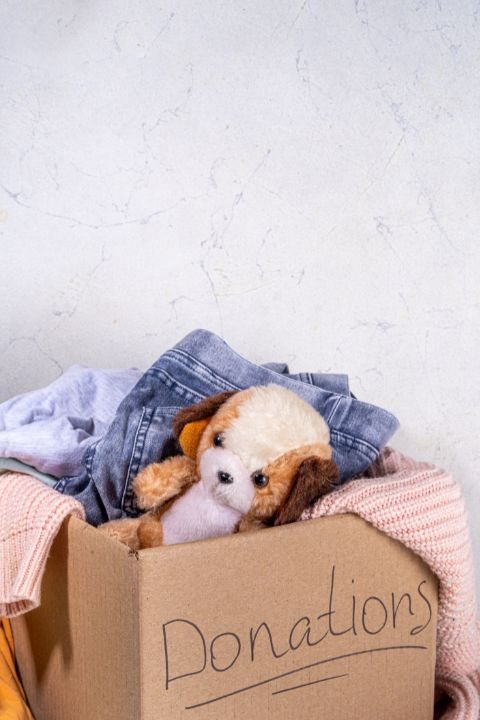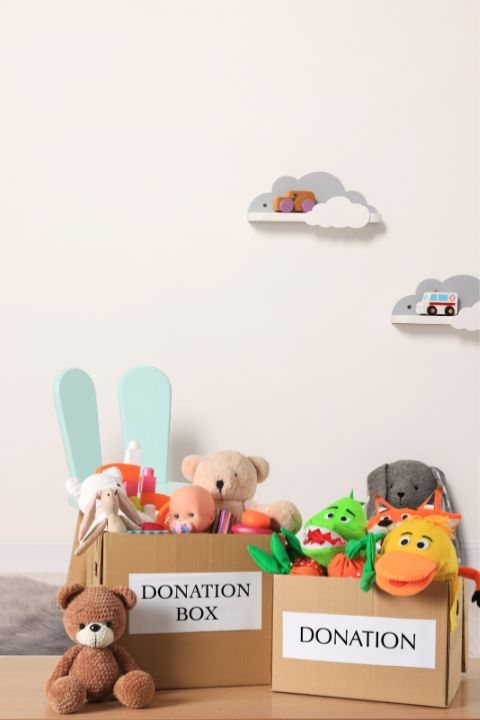
Sort toys with your kids into keep, pass on and fix-or-recycle. Donate only toys that are complete, working and clean, check anything uncertain at cpsc.gov/Recalls, and skip car seats and older cribs. In the Bay Area, book a doorstep pickup or ask for a free drop-off list, and recycle what’s broken.
In this article
If your living room has quietly turned into a toy store, you’re in good company. And here’s some good news for parents who dread the clear-out: in a University of Toledo study published in 2018, toddlers given four toys played with each one for longer, and in more varied ways, than toddlers given sixteen.
Fewer toys can mean deeper play. Here’s how to decide what stays, what goes and how to pass the rest on.
Step 1: Sort together
Kids are far more generous when they’re part of the decision. Set out three baskets:
- Keep – current favorites and anything played with this month.
- Pass on – outgrown, duplicate or forgotten toys in good shape.
- Fix or recycle – broken, incomplete or worn-out toys.
With toddlers, pre-sort quietly and let them weigh in on a few. Older kids can run the whole thing – choosing what to pass on is one of the best lessons a toy will ever teach.
Not ready to part with something? Try a toy rotation: box up a few keepers and swap them back in a month later. Old toys feel new again.
Step 2: Run the toy condition check
- Complete. Puzzles and games have every piece. Count them and write the number inside the lid.
- Working. Electronic toys power on and come with their batteries or chargers.
- Clean. Wipe down hard toys; wash stuffed animals and check for rips or loose eyes.
- Safe. No sharp edges, cracks or broken parts.
Step 3: Check for recalls
Not sure about an older toy? Search the US Consumer Product Safety Commission’s list at cpsc.gov/Recalls. It’s illegal to sell recalled products, so recalled toys can’t be donated – follow the recall instructions instead.
Step 4: Pack and pass them on
Pack toys in any sturdy bags or boxes (keep small pieces in zip bags), then choose how to send them off:
- Light Pickup – one bag up to 20 lbs, $24.99 onwards.
- Flexi Pickup – more bags, boxes or ride-on toys, $42.99 onwards, depending on the vehicle.
- Free drop-off list – we’ll email you organizations we support that accept toys.
You can mix toys with outgrown clothes, shoes and children’s books in the same booking. After delivery, we’ll let you know which organization received them – a nice moment to share with your kids. More on donating toys.
What about baby gear?
Baby clothes, shoes, books and toys are always welcome. Two big items aren’t:
- Car seats. They expire, and a seat that’s been in a moderate or severe crash shouldn’t be used again. Target’s twice-yearly car seat trade-in (fall 2026: September 20 to October 3) gives you a bonus toward new baby gear instead.
- Older cribs. Cribs must meet federal safety standards that took effect on June 28, 2011, and drop-side cribs can’t meet them, so older cribs can’t be donated.
More on both in our guide to what not to donate.
Don’t forget outgrown clothes and shoes
Most babies triple their birth weight by their first birthday, so kids’ clothes and shoes often get outgrown long before they wear out. Wash everything, keep shoes in pairs and add them to the same bag as the toys. Kids’ shoes in every size are one of the things the organizations we support ask for most often. More on donating clothes and shoes.
What to do with broken toys
Many toys mix plastic, metal and electronics, so how to recycle them depends on where you live. Take the batteries out first – batteries never go in the trash in California – then check your local lookup tool:
- San Francisco: Recology WhatBin
- East Bay and Palo Alto: StopWaste RE:Source
- San José: San José Recycles
- Santa Clara and San Mateo counties: RecycleStuff.org
Make it a habit before birthdays and holidays
The easiest time to pass toys on is right before new ones arrive. Try “one in, one out” for gifts, keep a giving box in the closet for outgrown things, and plan a family sort-out before birthdays and the holidays. The toy pile stays manageable, and giving becomes part of the celebration.
Frequently asked questions
Can I donate used stuffed animals?
Yes, if they’re freshly washed with no rips or loose parts.
Can I donate toys with missing pieces?
Please don’t – incomplete games and puzzles can’t be used. Recycle them where your local rules allow.
Can I donate a used car seat or crib?
No. Car seats expire and can’t be checked for crash history at the door, and cribs must meet federal safety standards. Baby clothes, shoes, books and toys are welcome.
How do I get my kids to give away toys?
Involve them. Let them choose what to pass on, keep true favorites off the table, and do it before birthdays or holidays when new toys are on the way.
- Dauch et al. (2018), Infant Behavior and Development (University of Toledo)
- CPSC, Recalls and product safety warnings
- CPSC, Stop online sale of recalled products
- American Academy of Pediatrics (HealthyChildren.org), Car safety seat checkup
- NHTSA, Car seat use after a crash
- Target, Car seat trade-in fall 2026
- CPSC, Crib Information Center
- Mayo Clinic, Infant growth
- California DTSC, Batteries